

Online education is global by default.
A creator can publish a course from Italy and reach students in Spain, Brazil, Germany, France, the United States or almost anywhere else in the world.
The technology for distributing knowledge globally already exists.
But there is a problem that becomes much more obvious after the student buys the course: reaching an international student is not the same as being able to communicate with them.
A student might understand enough English to follow a recorded lesson. That does not necessarily mean they feel equally comfortable asking a complicated question, joining a discussion, speaking directly with the creator or participating in a community where everyone communicates in English. And that difference matters.
The Course May Be International. The Conversation Often Isn't.
For years, internationalizing an online course mostly meant translating the sales page, adding subtitles or producing content in several languages. Those things are still important. But they solve only one part of the problem.
Consider what happens after someone enrolls. They may need to ask the creator a question, request support, discuss a lesson with other students, participate in a private community, join an onboarding conversation, explain a specific problem, or speak directly with the creator.
Suddenly, the challenge is no longer translating static content. It is translating human communication. And human conversations are dynamic. People ask follow up questions. They change subjects. They use expressions that are natural in their own language. They want to explain something precisely without first rewriting every sentence in a language they do not normally speak.
For an international student, that can create friction at exactly the moment when engagement should be increasing.
Understanding a Language Is Not the Same as Expressing Yourself in It
There is an important difference between consuming content in another language and actively participating in that language. Someone may comfortably watch an English language tutorial while still hesitating before writing a detailed technical question in English.
The same person may understand a creator perfectly but feel uncomfortable speaking spontaneously during a call. This can create an invisible participation barrier. The student is there. They bought the course. They understand the material. But they participate less because communicating requires additional effort.
For course creators trying to grow internationally, that raises a different question: What if students did not have to adapt their language to the community? What if the communication layer adapted to them instead?
A Multilingual Community Where Everyone Can Use Their Own Language
This becomes especially relevant inside student communities. Imagine a private group connected to an online course. One student is Italian. Another is Spanish. Another is Brazilian. Another is German.
Traditionally, the creator chooses a common language often English and everybody is expected to use it. There is another possible model.
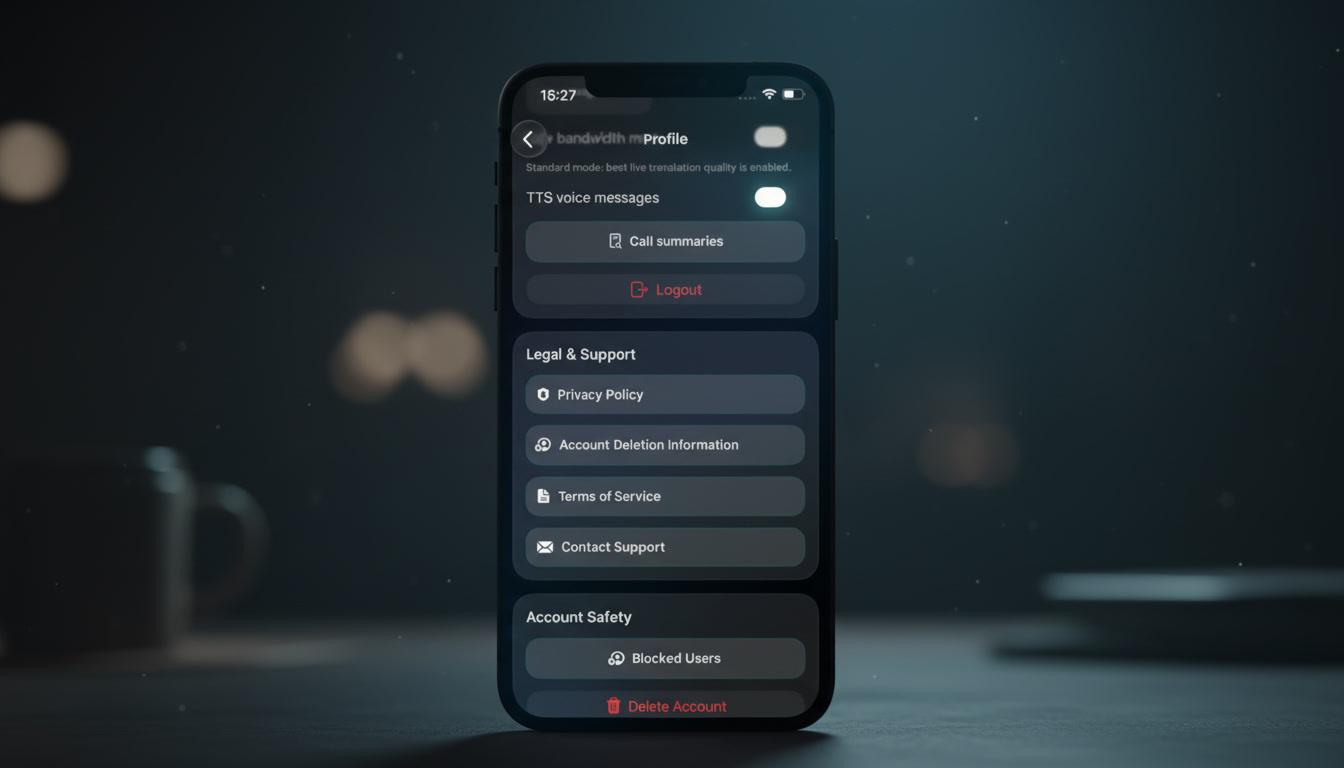
With OneVoice, multilingual groups can allow participants to write in their own language while receiving messages in the language they have chosen. An Italian student can write naturally in Italian. A Brazilian student can write in Portuguese. A Spanish student can respond in Spanish.
Each participant can continue following the same group conversation while OneVoice handles the translation between them. The community remains shared. The languages do not have to be.
That changes the role of translation. Instead of asking students to manually translate individual messages before participating, translation becomes part of the communication experience itself.
The Creator Can Use Their Own Language Too
The benefit does not apply only to students. Course creators themselves may want to expand into markets where they do not speak the local language fluently. Traditionally, that creates a difficult choice: you either communicate only with students who understand your language, or you spend additional time manually translating messages and responses.
A multilingual communication layer creates another possibility. The creator can write in their preferred language while students receive the communication in theirs. That can be useful for announcements, answers, discussions and everyday interaction inside an international community. The goal is not to make everyone speak the same language. It is to make everyone understand the same conversation.
Some Conversations Need More Than Text
Not every student problem can be solved through messaging. Sometimes a conversation is simply easier by voice or video. It could be onboarding, student support, consulting, mentoring, explaining a complex topic, answering questions, or talking with a prospective student.
This is where language differences can become even more noticeable. Writing in another language gives you time to think. Speaking does not.
OneVoice also supports voice and video calls with translation, helping people communicate even when they prefer different languages. For course creators, this means multilingual communication does not have to stop when the conversation moves beyond text. A student and creator can communicate more naturally without requiring both participants to be fluent in the same language. The technology handles more of the language barrier so the people involved can focus on the conversation itself.
Joining the Conversation Shouldn't Become Another Barrier
There is another source of friction that is easy to overlook. Every additional registration process, download or technical requirement creates one more step between the student and the conversation. Sometimes you simply want to speak with someone.
OneVoice can also make it possible to invite someone to a conversation through a simple link, allowing them to join from the web. That can be particularly useful when communicating with prospective students, offering support or introducing someone to the platform for the first time. The objective is straightforward: make starting the conversation as easy as possible. Technology works best when it becomes less visible. The important part should be the conversation, not the process required to start it.
International Growth Is Also a Communication Problem
Creators often think about international expansion primarily as a marketing opportunity: more countries, more potential students, a larger audience. But international growth also creates a communication challenge. The more geographically diverse the audience becomes, the more linguistically diverse the community becomes as well.
A creator may successfully acquire international students and still struggle to build an international community around them. That distinction is important. A student who can purchase your course is not necessarily a student who can comfortably participate in everything surrounding your course. If communication remains limited to one language, part of the potential international audience may remain passive. Removing some of that friction can make international communities more accessible.
About OneVoice
OneVoice is a multilingual communication platform for Web, iOS and Android that uses AI powered translation to help people communicate across languages through messaging, multilingual group conversations, voice calls and video calls. The platform is continuously evolving with one central objective: making language less of a barrier to communication.
Learn more at OneVoice.
How AllPros Helps Course Creators Make Better Decisions
Creators evaluating online education platforms to serve international audiences can find verified reviews, unbiased comparisons, and real learner feedback on AllPros. Learn which platforms, courses, and instructor approaches work best for building global communities.